

You know the feeling. Brad Holmes makes a pick and you just sit there for a second. Long pause. Slow squint. Then the nod. Not fireworks. Not the kind of Saturday that has you pricing tattoos before the third round is over. Just the nod. That’s been the Detroit Lions 2026 draft class experience, and honestly, once you hear the full case, the nod turns into something more confident than that.
Brett Whitefield, who has been openly critical of Holmes’ recent classes, came out and called this his favorite Brad Holmes draft yet. That’s not nothing. When a guy who has publicly pushed back on the process turns around and says this is the one, you pay attention.

Key Takeaways
- Brett Whitefield calls the 2026 Lions draft his favorite Brad Holmes class yet because Detroit ditched the cute picks for old-school trench dogs, physicality, and proven tape over raw upside dreams.
- Blake Miller (OT) and Derrick Moore (EDGE) headline with high-floor reliability. Miller’s consistency and Moore’s pass-rush juice make them feel like Day 1 starters built for Detroit’s nasty style.
- Jimmy Rolder (LB) and Keith Abney II (CB) add sneaky value: versatile speed at linebacker and feisty corner depth that fits the Lions’ demand for tacklers who survive the grind.
- Day 3 gems like Skyler Gill-Howard (interior pressure) and UDFA Eric Hunter (LB speed) stack competition and grit, raising the floor without fireworks.
- This class screams Lions identity (work boots over loafers) primed to age well by delivering honest football players who win in December.
Brett Whitefield sees a Detroit Lions 2026 draft class with teeth
Whitefield didn’t come at this from blind loyalty. He said flat-out he’s been critical of Brad Holmes’ last couple draft classes, and fair enough. Some of that criticism has shown up on the field. So when he says this is his favorite 2026 NFL Draft class of the Holmes era, that carries some weight.
The reason is simple, and pretty damn Detroit. The Lions stopped getting cute.
Nothing cute, just business as usual.
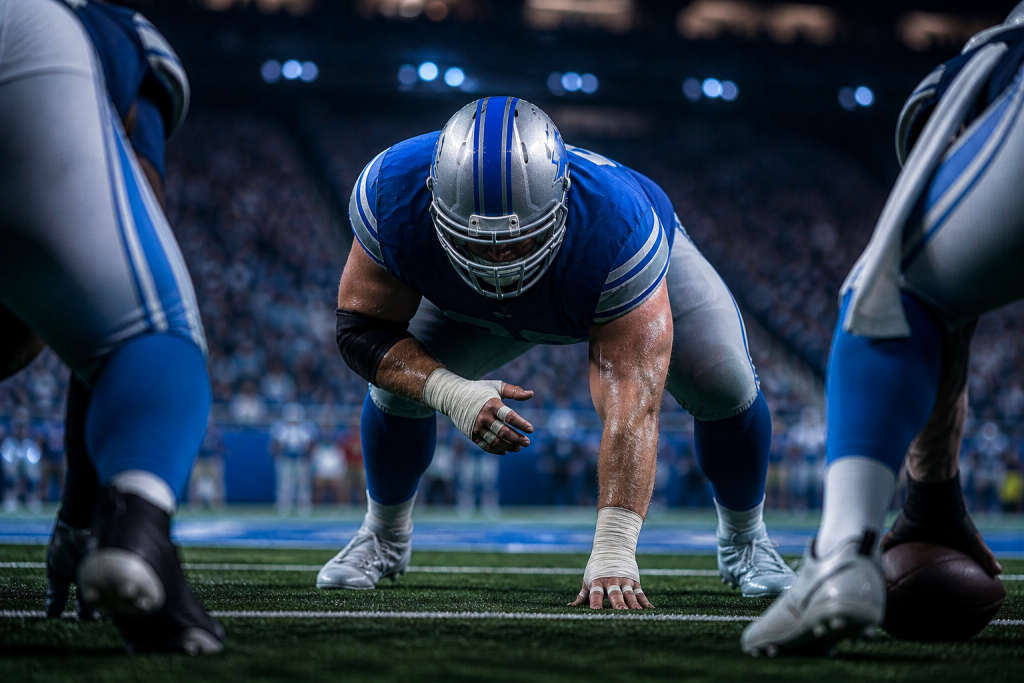
That was the heartbeat of his whole argument. Detroit went back to targeting physical players, trench players, nasty players, “dogs” in the way Dan Campbell means it. No weird detours. No reaching for something fancy because it feels clever. Holmes attacked the offensive line, added edge help, brought in a linebacker with range, found corner depth, and kept stacking competition all over the roster. While not every pick was a Round 1 splash, the depth is what mattered.
There’s another point Whitefield made that matters. NFL player development gets romanticized. Fans talk themselves into upside every spring, then act shocked when the same flaws show up in November. Whitefield’s view is that players often stay who they are. That makes proven tape matter more than the dream of what a guy might become. For a fan base that sat through decades of “project” players turning into cautionary tales, that logic hits home.
Blake Miller and Derrick Moore feel like old-school Holmes
Blake Miller is the cleanest example of that mindset. A lot of people wanted Monroe Freeling because the ceiling looked flashy. Whitefield liked Freeling too, mostly as a pass-protection upside swing. But Blake Miller, the offensive tackle from Clemson, had the stronger case where it counts, the tape, the consistency, the growth, the floor.
He pointed to Blake Miller’s improvement from season to season, and the fact that he kept getting better while Clemson, as a whole, took a step back. That’s not nothing. Miller started 54 games as an offensive lineman, played with an edge in the run game, and handled top pass rushers better than he handled the random guys you barely hear about. Whitefield saw a day-one starter with some technique cleanup still left in the tank. That’s a nice place to start.
It also fits the Holmes pattern when he’s at his best. Penei Sewell felt safe because he was dominant. Aidan Hutchinson felt safe because the resume was right there in front of your face. Miller has some of that same energy. High floor. Real upside. Less praying, more projecting.
Then came Derrick Moore, and this is where Whitefield lit up. He had Derrick Moore, the defensive lineman from the University of Michigan, as the fourth-best true edge rusher in the class, which makes landing him in the second round feel like Round 1 value if that board is even close to right. He also pushed back on some of the consensus chatter. In his view, Moore is a better athlete than Zion Young, and a better fit than some of the bigger-name edge options fans were circling.
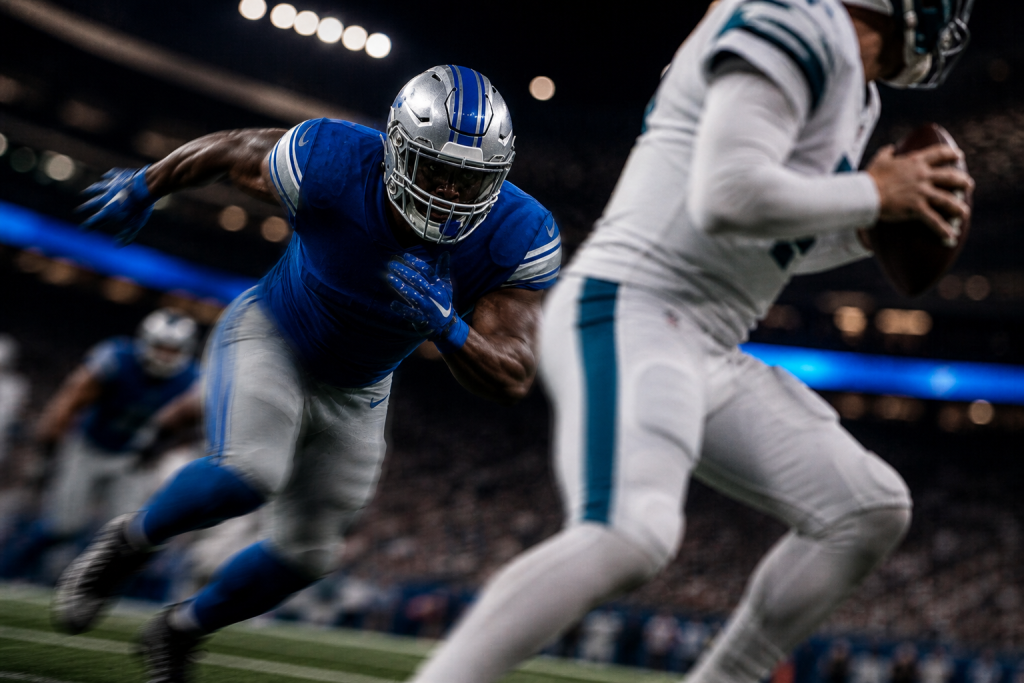
The numbers backed it up. Whitefield said Derrick Moore’s pass rush win rate was strong across the board, over 20 percent recently with solid tackles for loss, and even higher in true pass sets and third-and-long situations. On tape, he saw heavy hands, real power, enough bend for a 260-pound edge, and pass-rush tools beyond the basic bull rush. Club-rip, chop, swipe, it’s not a one-note player.
Moore still needs more inside counters, but here’s the part Lions fans should care about, he already looks built for what this defense asks from its edges. Collapse the pocket. Play violent. Make the tackle earn everything. Whitefield even said Moore might be the best pass-rush partner Hutchinson has had.
Jimmy Rolder and Keith Abney II might be the sneaky wins
If Miller and Moore were the grown-man football picks, Jimmy Rolder was the one that made some fans reach for the aspirin. Whitefield wasn’t having that. He loved the pick before the draft, said he wanted Detroit to trade back into the third round for him, and then got to watch Holmes land him in the fourth.
That’s conviction.
Rolder is the kind of player defensive coaches love because he doesn’t fit in one little box. Whitefield described him as a Will-Sam hybrid with take-on ability, block shedding, blitz value, and movement skills that hint at something bigger. He started as a safety convert, added weight, got on the field at the University of Michigan as one of the Wolverines, and flashed coverage ability that stood out more than what you usually see from their linebackers.
That matters because Detroit still has real questions next to Jack Campbell. Malcolm Rodriguez can help. Derrick Barnes can help. But Jimmy Rolder gives them options. Whitefield even floated the idea that Barnes could kick to Will while Rolder handles Sam work early, or that Rolder could earn a bigger off-ball role by the end of the year. Either way, he saw a player with starting potential, not just a special teams body.
Keith Abney II was another value pick Whitefield loved. He had him as a top-60 player, which makes getting him on Day 3 look like a steal unless there’s something teams knew that we don’t. On the field, though, the fit is obvious. Small corner, feisty as hell, physical, good ball skills, and always ready to tackle, reminiscent of the secondary talent Arizona State has produced.
The comp he reached for was Amik Robertson, and Lions fans know why that’s appealing. Detroit asks a lot from its corners. They have to cover, tackle, survive in the run game, and defend with their face in the fan. Whitefield also made a good point about shorter corners; the sideline can become their best friend outside. That could make Keith Abney II a cleaner fit on the boundary than people assume.
And yes, corner depth in the secondary matters more than fans like to admit. Whitefield said corner is one of the league’s highest attrition spots. No kidding. Try tackling tight ends and fitting the run over and over, then sprinting with receivers the next snap.
Kendrick Law, Skyler Gill-Howard, and Tyre West bring day-three grit
Detroit didn’t push future assets around for no reason, but Holmes still found spots to move when he wanted to. Kendrick Law was one of those swings, and Whitefield had a fun idea with him. Forget slot receiver only. He thinks Kendrick Law could get running back snaps at some point.
It makes sense. Kendrick Law has 4.45 speed, gadget experience, backfield reps, and the build of a player who can handle traffic, all traits that highlight his versatility out of Kentucky. If Detroit wants to steal touches without adding wear to Amon-Ra St. Brown or Jameson Williams, Kendrick Law could be that chess piece. For a fifth-rounder, that’s a smart little bet.
Skyler Gill-Howard might be the pick that ages the best if Whitefield is right. He had a third or early fourth-round grade on Skyler Gill-Howard and blamed the slide on injury. The appeal is obvious with this defensive lineman from Tennessee: explosive first step, pass-rush moves, run-defense production, and a role Detroit badly needs. The Lions got pressure last year, but Whitefield said the time to pressure was too slow because they didn’t have enough interior push. Skyler Gill-Howard can help that.
Tyre West is more of a back-end swing, but the idea is clear. Big edge. Length. Power. Goal-line and run-setting upside from a player like Tyre West out of Texas Tech. The pass-rush game needs work, but on Day 3, if a guy has one trait you can hang your hat on, that’s worth a shot with Tyre West.
Five UDFAs who can make noise in camp
Whitefield rattled off five undrafted names worth tracking, unlike the draft picks, and one of them might hang around longer than people expect.
Eric Hunter was the big one. Whitefield loved him, pointed to the guaranteed money, and said he thinks Hunter has a real shot to make the 53. The selling points were easy to follow: linebacker versatility, sub-4.5 speed, coverage instincts, and a play where he jumped a halfback screen for a pick-six. If that translates at all, Detroit found a toy.
Miles Kitselman might not catch much, but Whitefield thinks he can block his tail off. He called him draftable, compared him to a lighter version of a mauling in-line tight end, and made the point that Detroit has been looking for more bite in that part of the room. If he can move people, he’ll get a look.
Anthony Lucas is the traits swing. Long, athletic, built for edge-setting work as a defensive lineman, and still unfinished. Aidan Keanaaina gives them nose tackle depth and some pass-rush flashes, which is useful because the room isn’t exactly overflowing with true nose options. Then there’s Luke Altmyer, the Illinois quarterback with 36 starts, pro-style experience, command at the line, and enough mobility to be more than a camp arm. That QB3 job might not be sexy, but a guy who can run the offense right has value.
The Grit Check
This stuff matters because Lions fans know the difference between a draft class that looks cool on a graphic and one that helps you win in December. We’ve lived through enough “wait till this raw athlete figures it out” nonsense to last three lifetimes. Matt Millen sold hope like a timeshare. Holmes sells football players.
That’s why this class lands. Blake Miller and Derrick Moore bring trench juice. Jimmy Rolder brings speed at linebacker, which this defense needs. Keith Abney II looks like one of those annoying corners you hate until he’s on your team. Skyler Gill-Howard gives Detroit a shot at the inside pressure they’ve been missing. Even the gadget pick in Kendrick Law comes with a purpose. Tyre West adds that day-three grit.
The Lions 2026 Draft Class feels like work boots, not loafers. And for this team, that’s a compliment.
Frequently Asked Questions
Why does Brett Whitefield love this 2026 draft class more than Holmes’ recent ones?
Whitefield praises it as a return to Detroit’s roots: targeting physical trench players, nasty edges, and linebackers with range instead of getting cute or chasing unproven upside. He’s been critical of prior classes but sees this one stacking proven tape and competition across the roster. For Lions fans scarred by project busts, that high-floor approach hits different.
Is Blake Miller or Derrick Moore the steal of the draft for Detroit?
Both feel like old-school Holmes wins—Miller’s 54 starts, run edge, and growth make him a day-one tackle with cleanup upside, while Moore’s 20%+ pass-rush win rate and bend landed Round 1 value in Round 2. Whitefield ranks Moore as the fourth-best true edge, a perfect Hutch partner for pocket collapse. They’re the grown-man picks that raise the Lions’ trench juice.
What makes Jimmy Rolder and Keith Abney II sneaky good fits?
Rolder’s Will-Sam hybrid skills—block shedding, blitzing, coverage flashes—give options next to Jack Campbell, with starting potential Whitefield coveted pre-draft. Abney’s feisty slot corner traits, tackling, and sideline savvy echo Amik Robertson, vital for Detroit’s high-attrition secondary. Both bring Day 3 grit without fitting neat boxes.
Which Day 3 or UDFA could surprise in camp?
Skyler Gill-Howard’s explosive interior rush addresses slow pressure issues, graded third/fourth round despite sliding on injury. UDFA Eric Hunter stands out with sub-4.5 speed, coverage picks, and guaranteed money signaling real 53-man shot. They’re the grit bets that could turn ‘boring’ depth into December contributors.
Does this class have enough star power, or is it just safe?
No Round 1 splash, but Whitefield argues it carries Round 1 impact through fits like Moore and Miller, plus versatile depth that creates competition. It raises the floor with honest players whose tape already screams Lions identity—toughness, physicality, no praying for development. If they hit, it’s Brad Holmes doing it again without the hype.
Final thoughts
Whitefield’s case wasn’t that this class will outshine the 2023 group by default. His point was cleaner than that. This draft looks like Detroit got back to its identity, toughness, trench play, physicality, and players whose tape already says something. It carries Round 1 impact despite the draft slotting.
For a team trying to stay dangerous, that kind of class ages well. It raises the floor. It creates competition. It gives the coaching staff more honest football players to work with.
If Blake Miller locks down a tackle spot, Derrick Moore becomes Hutch’s running mate, and Jimmy Rolder turns into a real linebacker answer, are we still calling this class boring, or are we ready to admit Brad Holmes might’ve done it again with his draft picks?



This is what I’ve been saying all offseason. Holmes stopped overthinking it and just went to work. Blake Miller’s gonna be a problem for defenses, Derrick Moore’s pass rush numbers don’t lie, and we finally got guys who fit what Dan’s building. No more weird experiments, just football players who know how to move people around.
I get the appeal of what Whitefield’s saying here, but I’ve been burned before by the “high floor” talk. Miller and Moore better hit from day one because if this class doesn’t produce early impact, boring and effective don’t mean much come September. I’m pulling for it, just need to see it work.
This is night and day from the garbage we sat through for years. No more hoping some project figure it out by year three. Holmes is building it like football’s supposed to be built, solid from the ground up. That’s the difference right there.