Physical Address
304 North Cardinal St.
Dorchester Center, MA 02124
Physical Address
304 North Cardinal St.
Dorchester Center, MA 02124

The closer we get to draft night, the more I keep coming back to one idea: the Lions may need to move back, not up. If Brad Holmes stays put at No. 17, tackle first and edge second still feels solid, but a trade down could give Detroit something even better, more swings at real contributors.
For the Lions, that matters because this roster still has spots to fill. When I look at the latest Detroit Lions Draft News, I don’t want one flashy pick. I want a draft haul that leaves this team deeper, tougher, and harder to push around.
I love the way this mock draft plays out, with that all-day, any-time welcome to Lions fans. It feels like the right energy for this point in the offseason because the clock is ticking fast. Draft day is almost here, and every discussion starts to feel less like theory and more like a real path the team could take.
That urgency matters. Earlier draft talk centered on a familiar split, tackle first or edge first. In a recent discussion with Chris, the idea was simple: one mock started with tackle, the other with edge, and then they flipped in round two. I still think that’s a smart baseline if Detroit holds every pick. If the Lions stand pat, I get the logic of going tackle first and edge second.
Still, this version of the conversation hits a different nerve. Instead of asking which prospect to grab at 17, it asks whether Detroit should rethink the whole setup. That’s where things get interesting, because Brad Holmes has made a habit of moving around the board, and fans know that every extra pick can change the shape of a class.
I keep up with these discussions on the Sports Talk Detroit YouTube channel because they feel grounded in what fans are already arguing about. If I want broader NFL chatter around the same draft themes, I also like the extra coverage on SportsTalkExtra. Of course, all of this and more is shared in The Grit List weekly newsletter I send out.
The biggest swing in this breakdown is the idea that Holmes might need to stop chasing the board and start letting the board come to him. That stands out because the claim is blunt: he trades up a lot, and in this view, it hasn’t paid off the last two years.
I get why that hits home. Trading up is fun when the pick lands and becomes a star. It feels aggressive, decisive, and easy to sell. The problem is what it costs. Every move up trims away another chance to find a starter, a role player, or a cheap depth piece who matters in November, and January.
That is why the trade-down case lands so hard here. The Lions don’t need one answer. They need three contributors, or at least three players who can step into real snaps and hold up. When a roster is close, middle-round picks stop feeling like extras. They start feeling like oxygen.
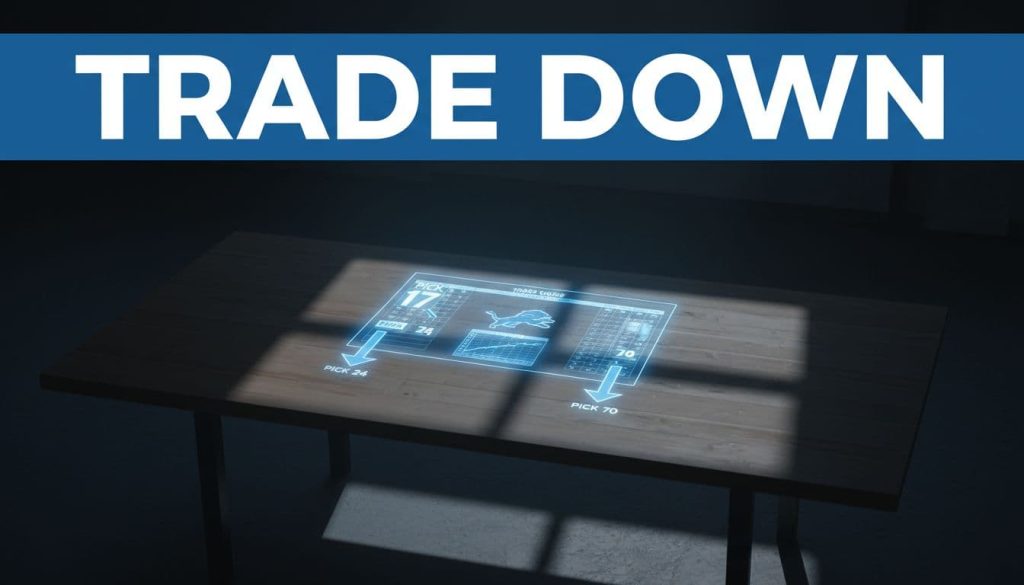
The core idea is simple, get a tackle you still like, then use the extra picks to attack edge, guard, corner, or interior depth.
That math makes even more sense because the back end of round one is always full of teams that think they’re one player away. A club hunting one more tackle, edge, receiver, or running back can talk itself into paying real value to move up. If Holmes can tap into that urgency, the Lions could turn one pick into a much wider net.
The first simulator used was PFSN, and the trade menu immediately gave Detroit options. One package from Cleveland was built around a move down from 17 while adding more picks, and a Bills offer brought future capital into play. The point of the exercise was not to haggle forever. It was to test whether moving back would wreck the board.
Here is the basic setup that was discussed:
Detroit Gives Pick 17 and Pick 222 to the Browns for Picks 24 and 70. That’s a no-brainer. You do it yesterday. Drop down, still get a really good tackle in the first round. And pick up a 3rd.
The second scenario was not as appealing to me. But I’m in the win now crowd for the most part. Here is the offer:
We give the Bills Pick 17. We get Pick 26, a future 2nd, and a future 7th. Meh.
The Browns deal got the nod because it added a valuable pick in that middle range, and that extra shot around pick 70 was the real prize. Once the board rolled forward, a few names vanished fast. The simulator had Detroit missing out on Kaden Proctor and several other prospects listed as Terrell, Tyson, Meador, Fono, and Freeling. In other words, the board broke poorly.
Yet the key target still sat there: Blake Miller.
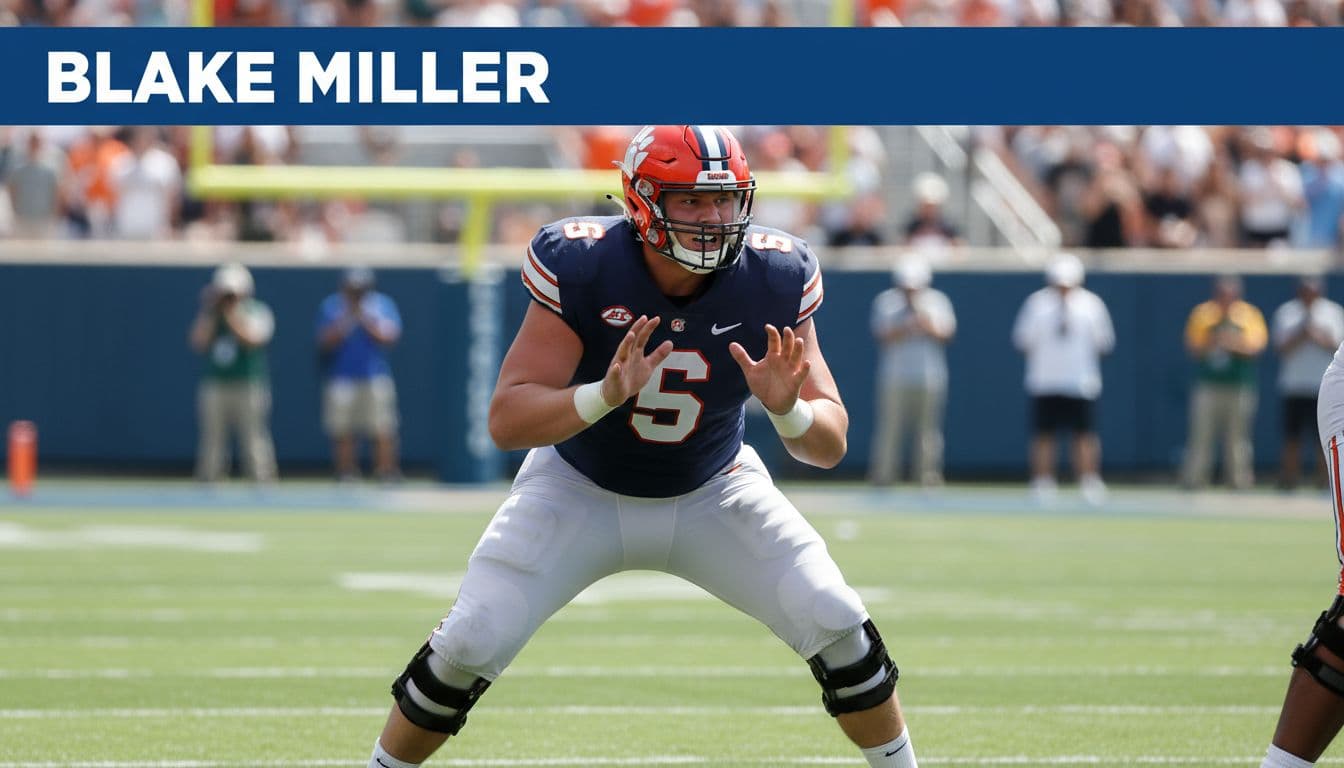
I love the way Miller was framed here, as a Taylor Decker clone with a meaner streak. That’s strong praise, and it speaks to the broader point. This tackle class looks deep enough in the middle and back half of round one that Detroit may not need to force the issue at 17. If the Lions can slide back and still land the tackle they want, the value starts to pile up fast.
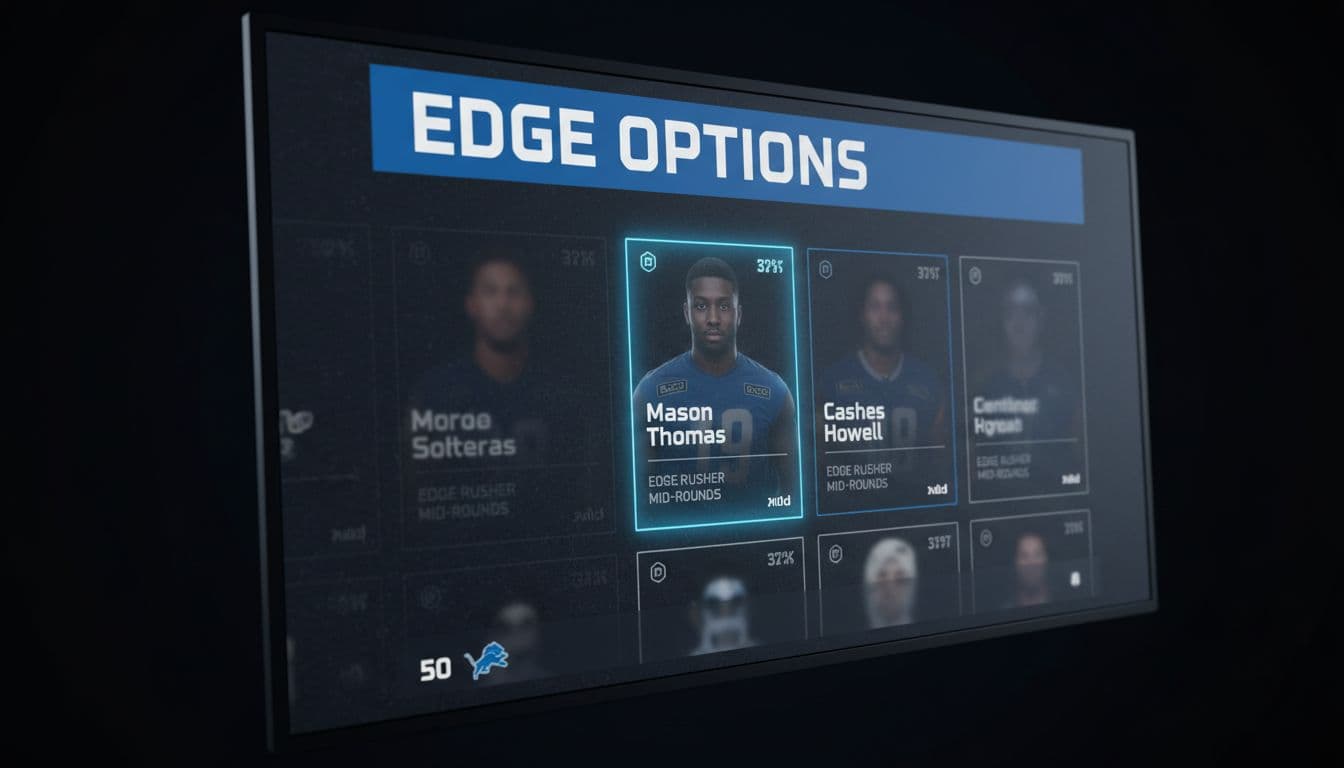
After Miller, the next decision point came at pick 50. Edge names were still there, which is exactly what makes the trade-down path so attractive. Cashes Howell was available. Mason Thomas was available. There were also corners like Chris Johnson, listed at 6-foot and 185 pounds, plus Keith Abney from Arizona at 5-foot-9 and 190. The choice made here was Mason Thomas, and I can see why. Once tackle is locked in, edge feels like the cleanest, and most obvious, next hit.
Then came the fun part, pick 70. Without the trade, that pick doesn’t exist. With the trade, the board opens wide. Caleb Tieran was there, a tackle who may settle at guard. Jennings Dunker was an option. Caleb Banks could help inside. Mike Washington Jr. was framed as an athletic freak and a possible one-two backfield punch with Gibbs.
That last part matters because it shows how different the whole board feels once Detroit adds another meaningful pick. Instead of chasing need with every selection, the Lions can start playing offense.
The second simulator, PFF, pushed the same idea from a different angle. Once again, trade offers showed up, and once again Cleveland was in the middle of it. The first goal was a richer deal, something around picks 24 and 39 in exchange for 17 and later capital. That version didn’t stick. A few tweaks got rejected too.
Then the trade finally clicked.
| Here was the scenario: Again, the Browns were the potential trade partner. Detroit tried to get 24 and 39, deal rejected.
Final accepted trade: Detroit sent 17 to the Browns, and received picks 24, 70, and 107
That is the kind of return that changes a draft board. Moving from one first-round choice to three picks in meaningful ranges gives Holmes room to breathe. It also keeps the Lions in range for the same type of player they wanted all along.
That is why Blake Miller came off the board again at 24. If Detroit had stayed at 17, the choice was described as being between Kaden Proctor and Blake Miller. After the trade, Miller was still there, and so were other tackle options like Caleb Lomu. The takeaway wasn’t that Miller is the only answer. The takeaway was that the tackle well may stay open longer than people think.
From there, the defensive discussion widened. The Lions were described as wanting a defensive end who can hold up against the run and set the edge. A player identified as Gabe looked like a possible fit, though not a finished version of that role yet. Because the Lions now owned picks 50 and 70, they could wait. Derek Moore could be there later. A bigger corner could be there too. That is where the phrase “let’s get weird” made perfect sense.
And if one target disappeared, the fallback options still had juice. Romelo Height, coming off a nine-sack season, was on the board. LT Overton was there as a bigger power end and run defender. Those aren’t panic picks. Those are good football bets.
The best part of this second mock came later. Detroit ended up with three fourth-round picks. That is not small change. Those picks can become a move back into round three, or they can stay put and flood the roster with competition. Either way, the Lions come out with choices instead of limits.
This is where the whole debate gets real for me. If the Lions stay at 17, I understand the appeal of taking a tackle like Francis Mauigoa and calling it a day. A plug-and-play answer on the line is easy to picture, and the recent Taylor Decker news is obviously part of the current roster picture, so that need only gets louder.
Still, this breakdown doesn’t really push me toward forcing a tackle at 17 no matter what. It pushes me toward trusting the depth of the tackle class. That is a big difference. If Holmes believes Mauigoa is clearly above the rest, fine, turn in the card. But if Mauigoa, Blake Miller, and the next tier are close on Detroit’s board, then trading down starts to look like the smarter play.
I keep coming back to the same sentence: this draft needs to bring back three real contributors. That goal lines up with the trade-down case far better than the stay-put case.
Viewed through the lens of the recent backfield talk around Isiah Pacheco, I think the argument gets even stronger. In the first mock, Mike Washington Jr. was floated as an explosive partner for Jahmyr Gibbs. If Pacheco is already in the mix, then running back drops down the urgency list. That lets Detroit use the extra capital on edge, guard, tackle depth, interior defense, or corner.
For the Lions, this isn’t about getting cute with the board. It’s about leaving draft weekend with answers at more than one spot.
That is why I think this video’s logic leans toward trading down from 17, not because the Lions should avoid taking a tackle, but because they may still get one they love and pick up more help behind him. If the line needs attention after Decker, and the backfield is less urgent because of Pacheco, the value of extra Day 2 swings only goes up.
The closer draft night gets, the more I buy this idea. I still like the cleanest version of the plan, tackle first and edge second if Detroit sits still. But the better version may be to move back, land Blake Miller or another tackle in that same range, and stack extra picks where the roster still needs bodies.
That is why the phrase “the trade back doesn’t suck” lands so well. It doesn’t just sound good. In these mock runs, it worked. Detroit kept access to the type of tackle it wanted, found edge help, and opened up room for more depth picks after that.
One Pride, do you think Brad Holmes has another draft day heist planned, or should he stay at No. 17 and take the tackle he loves? Comment below and let’s discuss!