
Holmes Swears He Didn’t Reach, But This Draft Looks Awfully Convenient
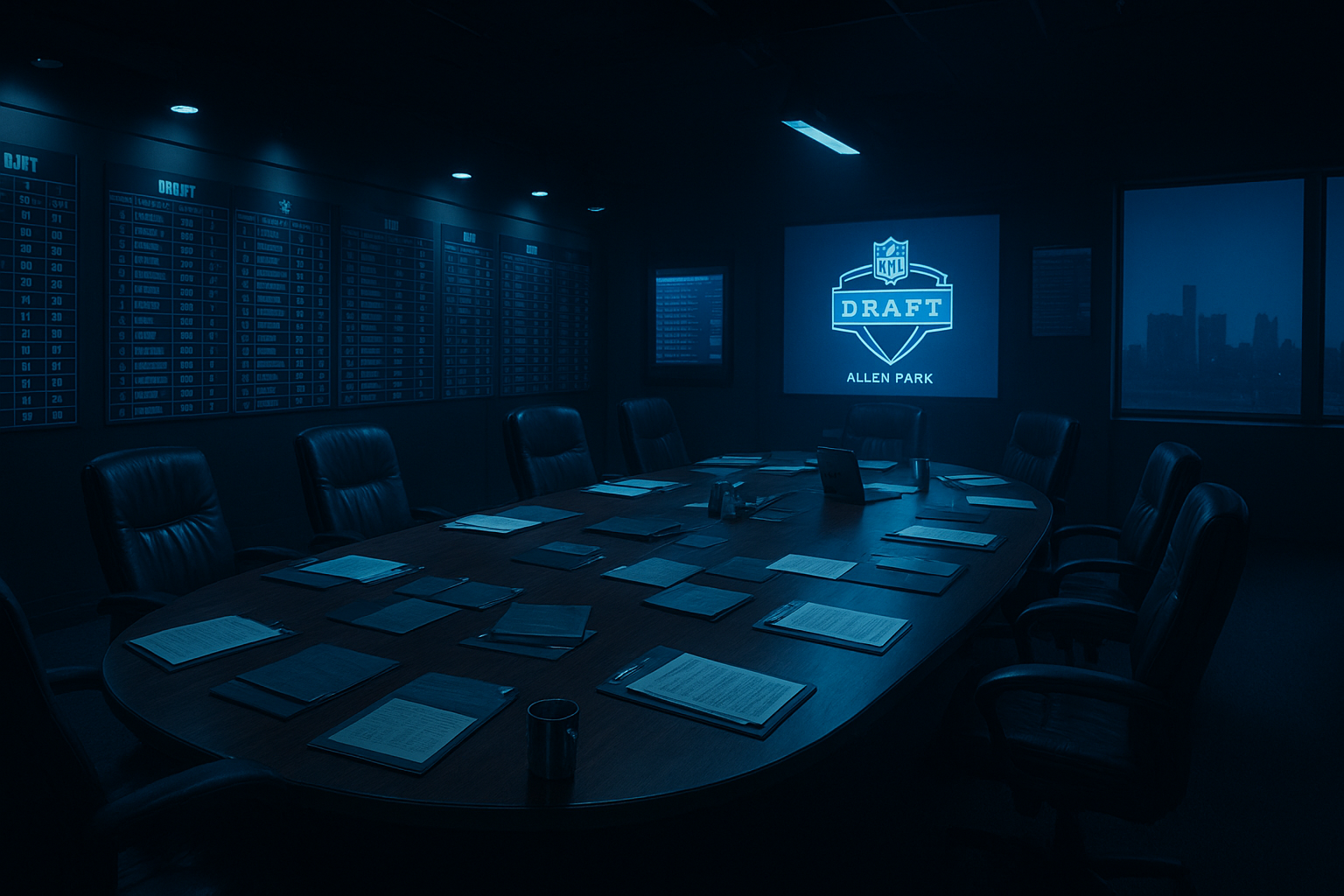
Brad Holmes has spent years preaching the gospel of best player available. Draft for talent, not for need. Don’t reach just because you have a hole to fill. It’s been his mantra since he got to Allen Park, and honestly, it’s been the right approach for a franchise that spent decades drafting for need and ending up with a roster full of guys who couldn’t play.
But then the 2026 draft happened, and suddenly Holmes looked like he was shopping with a very specific grocery list.

The Lions had three glaring needs heading into the draft: offensive tackle, defensive end, and linebacker. In that exact order. And what did Holmes do? He drafted offensive tackle Blake Miller, defensive end Derrick Moore, and linebacker Jimmy Rolder. If that’s a coincidence, it’s the most convenient coincidence in draft history.
The Reach Question That Won’t Go Away
Here’s where it gets interesting. According to media big boards, Holmes reached for all three of those guys. Miller and Moore both went about a half-round higher than expected. Rolder went nearly two full rounds earlier than projected.
Now, Holmes will tell you that media big boards don’t mean anything, and he’s not entirely wrong. The Lions have ignored consensus rankings before and found gold. But when you’re taking three straight need picks and all of them are considered reaches by the draft nerds, it starts to look like maybe you abandoned your own philosophy just a little bit.
Holmes Explains Himself
When asked about this directly, Holmes had his answer ready. It just lined up, he says. Pure coincidence that the best players on their board happened to play the exact positions they needed most.
“It just lined up, man,” Holmes told team reporter Tim Twentyman. “Look, there may have been some even ties at other positions. So if they’re even ties, where there’s other players that play other positions, but it’s like, ‘Look, I could pick one of them out of a hat and be thrilled with it.’ But then when it kinda hits some positions that might be a little more critical than others, it makes it pretty easy.”
Translation: when guys are graded equally, the tiebreaker goes to need. Which, fine, that makes sense for a team trying to win a championship. But it’s also not quite the same as pure best player available, is it?
Trust the Process, Question the Execution
Look, Holmes has earned the benefit of the doubt. This is the same guy who built this roster from nothing into something that can compete with anybody. If he says these were the best players on his board, then maybe they were. Maybe his scouts see something the media doesn’t.
But let’s also be honest about what happened here. Holmes needed specific pieces to complete this championship puzzle, and he went out and got them even if it meant reaching a bit. That’s not necessarily wrong when you’re in win-now mode, but it is a shift from the pure talent accumulation strategy that got the Lions to this point.
Holmes insists he didn’t compromise: “What we did not do is we did not get lesser players that we liked lesser because they played those positions and compromise getting better football players because they played other positions. That’s when you can get yourself in trouble.”
Maybe he’s right. Maybe Miller, Moore, and Rolder were legitimately the best players available when Detroit picked them. But if they weren’t, and Holmes reached because he needed bodies at those spots, well, at least he reached for the right spots.
Do you buy Holmes’ explanation or does this draft feel like he finally caved to the pressure of addressing needs? Let me know in the comments below.



Look, I get the skepticism but this is exactly what a GM should do when you’re actually competing for something real. Holmes built this team the right way for years, so if he needs to tweak his approach when it matters most, that’s not abandoning anything – that’s being smart. The guys he picked are going to help us win, and that’s what matters.
I want to believe him, I really do. But come on, three reaches in your three biggest need spots? That doesn’t happen by accident. I’m not saying it was the wrong move necessarily, but let’s not pretend this was some magical alignment of talent and position. Holmes made a calculation and went for it, which fine, but own it.
You know what, I’ve watched a lot of bad drafts over the years, and this isn’t one of them. Holmes has shown he knows how to evaluate talent in ways that matter. Is he bending his rules a bit? Maybe. But after what we’ve been through as fans, a GM who actually addresses real needs while staying competitive is something to appreciate, not nitpick.
The article basically admits these were reaches but also basically admits it doesn’t matter because we got guys at positions we needed. So why are we still pretending this is some gotcha moment? Holmes is doing his job, which is building a championship team, not collecting trophies for following some rigid philosophy.